Scene Description:
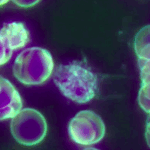
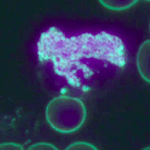
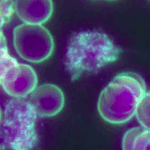
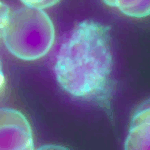
In the centre of the screen we see a large white blood cell (likely a neutrophil or monocyte). Its irregular, textured appearance stands out clearly from the many smooth, round red blood cells surrounding it. To the right, there is a cluster of red blood cells around a hazy fragment of debris — and between these two frames, the white blood cell appears to be edging closer, as if drawn toward the site of action.
Immune Cell Fact:
White blood cells like this are the body’s frontline defenders. They can sense chemical signals released by damaged tissue or invaders, and then actively crawl across the blood plasma toward the trouble spot. This behaviour is called chemotaxis — it’s how they know exactly where they’re needed.
Condition of the Red Cells:
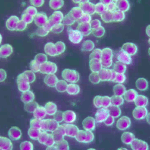
The red blood cells are generally round and intact, showing healthy membranes under darkfield. A few are stacked together in small clumps, which can happen when plasma proteins increase stickiness, or when the blood drop is a little thick.
Other Observation:
Notice how the white blood cell looks “alive” compared to the calm red cells — it’s dynamic, textured, and clearly interacting with its environment. It’s like seeing the immune system’s soldier moving into position while the red cells continue their steady work of carrying oxygen.
 Disclaimer