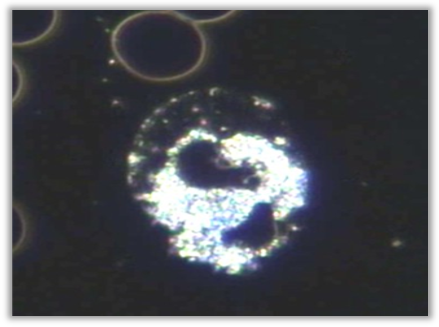
A Key Marker of Viral Stress & High Immune Demand
Appearance
A WBC with a translucent membrane shows a clear, glowing halo surrounding the outer border of the cell. The cytoplasmic edge becomes thin, bright, and sharply defined, while the inner structures appear less distinct.
This can be seen in both:
- Brightfield: faint, washed-out cytoplasm with a clear peripheral ring
- Darkfield: a bright, shimmering halo with a darker interior
Neutrophils and other granulocytes are the most common WBCs to display this phenomenon.
Implications
A translucent membrane is a major diagnostic indicator in live blood analysis. Its presence suggests:
Strong Viral Association
This is one of the clearest signs of viral activity in the body. WBCs under viral stress display accelerated metabolic function and increased oxygen consumption, giving rise to the characteristic translucent edge.
Possible Parasitic Burden
A translucent membrane may also indicate:
- High parasite load
- Endobiont activation
- Increased intracellular stress
Accelerated Cellular Metabolism
The cell is working intensely, consuming large amounts of oxygen. This state is often accompanied by:
- Immune hyperactivation
- Increased reactive oxygen species
- Fatigue, immune stress, or inflammatory symptoms
Interventions – WBCs with Translucent Membrane
Immune Protocol (when viral activity is suspected)
- Immucil + HumiCaps + NeoFlora
- Glutathione 500: 1 capsule 1–2× daily
Parasite Protocol (when parasitic involvement is likely)
- Parastil + Lamaria + HumiCaps (Neogenesis)
Supplements
- Calcium ascorbate (2 g twice daily)
- Zinc
- NAC (N-Acetyl-Cysteine)
- Proanthocyanidins
- Astaxanthin
- Bio-Ionic Mineral Concentrate
General Guidelines
- Increase water intake: (weight in kg ÷ 8) × 0.25 litres per day
- Chlorophyll-rich foods: chlorella, spirulina, wheatgrass
- Raw vegetable juices (greens & beetroot)
- Avoid alcohol, sugar, caffeine, drugs, and refined carbohydrates
- Increase antioxidant-rich foods
- Avoid saturated fats and low-enzyme diets
Further Investigations
- Viral and bacterial antibody panels
- Parasitology tests
- FBC + differential + ESR
- Peripheral smear microscopy
- Hepatitis screen
- TNF + tumour markers
- Sputum culture if infection suspected
 Disclaimer