You must be logged in to record observations.
Short Description
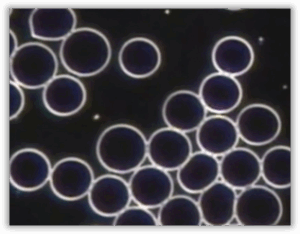
- Anisopoikilocytosis describes a pattern in which red blood cells show variation in both size and shape within the same blood sample. Rather than appearing uniform, the red blood cells differ noticeably from one another, with some appearing larger or smaller than expected and others showing irregular outlines.
- In live blood analysis, it is common to observe occasional variation in size or shape among red blood cells. However, when differences in both size and shape are seen across multiple cells and repeated fields of view, this combined pattern becomes more significant as an overall observation rather than an isolated finding.
- The presence of anisopoikilocytosis highlights reduced consistency in red blood cell structure, suggesting that the conditions influencing red blood cell formation, maintenance, or survival may be affecting how uniformly cells circulate within the blood environment.
Appearance
- The majority of RBCs vary greatly in shape and size, displaying irregular edges, varying sizes, membrane projections and fragments. Some RBCs are rod-shaped or may resemble bowling pins. Target cells are usually also present.
Pleomorphic Perspective
- This anomaly is caused by a pathogenic influence of the endobiont on the erythrocytes. Careful inspection will reveal that there are advanced phases of the endobiont occurring. This infestation will become obvious in darkfield by pressing lightly on the cover slip with a pointed object like the tip of a pen, which will break up the RBCs and release the chondrits from the cells.
Medical Perspective
- Anisopoikilocytosis may be observed in peripheral blood smears of patients with iron deficiency and/or thalassaemia.
Relevance
Anisopoikilocytosis is a notable finding in live blood analysis because it reflects variability rather than uniformity in red blood cell structure. Its relevance increases when this pattern is observed across multiple fields of view or alongside other red blood cell and plasma changes, indicating a broader shift in blood terrain rather than an isolated variation.
Implications
- Possible thalassemia
- Iron deficiency anaemia
- Haemolytic anaemia
Associated Symptoms
- May be asymptomatic
- Lassitude
- Dizziness
- Weakness
- Poor concentration
- Pallor
- Shortness of breath
- Increased heart rate
- Palpitations
Interventions
Any combination of the following, depending on the rest of the case:
SUPPLEMENTS:
Chelated Iron supplement
Trace minerals: Bio-lonic Mineral Concentrate (Neogenesis Health Products).
Working with
- This is usually observed in patients with severe iron deficiency anaemia or thalassemia. Further testing is recommended in patients with moderate to severe anisopoikilocytosis. Testing includes FBC, Iron, studies, Haemoglobin Electrophoresis and investigations to determine the cause of iron deficiency where thalassemia have been excluded, as this may be due to chronic blood loss (e.g. from a bleeding gastric ulcer). Iron supplementation is indicated in the majority of these cases.
General Guidelines
GENERAL GUIDELINES:
- Increase water intake. To determine necessary daily water intake (in litres): Weight (kg) / 8) x 0.25.
- Increase chlorophyll-rich foods: chlorella, spirulina, wheat grass juice / powder, barley grass juice / powder, alfalfa tablets, green leafy vegetables.
- Blackstrap molasses.
- Avoid saturated fat, refined carbohydrates and food deficient in natural enzymes.
- Avoid alcohol, caffeine, sugar, drugs and non-essential medication.
- Raw vegetable juices (greens & beet), sprouts and superfoods.
- Test for Thalassemia (FBC, Iron studies & Haemoglobin Electrophoresis.
Functional Systems Influenced
Hematological
Anisopoikilocytosis reflects reduced consistency in red blood cell size and shape within the blood itself. This matters because red blood cells function best when they are uniform and flexible, allowing them to circulate efficiently and respond predictably to the body’s needs. Increased variation can make circulation less streamlined, particularly at the micro level.
Digestive & Nutrient Assimilation
The structure and uniformity of red blood cells depend on the steady availability of nutrients required for cell formation and maintenance. When digestion or absorption is less efficient, red blood cells may reflect this through greater variation in size and shape over time.
Metabolic
Metabolic processes influence how red blood cells are renewed, maintained, and recycled. When metabolic balance is reduced, red blood cell turnover may become less consistent, allowing a wider range of cell forms to remain in circulation.
Commonly Associated Terrain Imbalances
Malabsorption / enzyme deficiency
When nutrients are not efficiently broken down or absorbed, the building blocks required for consistent red blood cell development may be limited, contributing to variation in cell size and shape.
Iron insufficiency
Iron plays a central role in red blood cell structure and function. Changes in iron availability or utilisation can influence how uniformly red blood cells are formed, without necessarily indicating a clinical deficiency.
B12 / Folate insufficiency
These nutrients support red blood cell development and maturation. Reduced availability may be reflected in greater variability in red blood cell appearance over time.
Mineral deficiency
Minerals act as cofactors in many cellular processes, including red blood cell stability and renewal. Insufficiency may subtly affect cell consistency and resilience.
Secondary / Contextual Terrain Imbalances
Oxidative stress
Ongoing oxidative pressure can influence red blood cell membranes and lifespan, allowing structurally varied cells to persist longer in circulation.
Low antioxidant reserve
When antioxidant protection is reduced, red blood cells may be less able to maintain consistent structure in the face of everyday oxidative demands.
Thyroid slowdown / low metabolism
Lower metabolic tone can influence the rate at which red blood cells are renewed and cleared, contributing to increased variation in circulating cell forms.
Protein intake / albumin low
Adequate protein availability supports plasma balance and red blood cell structure. Reduced availability may influence overall cellular consistency.
Supportive Focus & Awareness
-
Awareness of factors that support consistent red blood cell structure and renewal
-
Awareness of digestive efficiency and long-term nutrient availability
-
Awareness of metabolic balance and energy regulation
-
Awareness of oxidative balance and cellular resilience
-
Awareness of energy levels, stamina, and recovery patterns
Commonly Reported Experiences
Some individuals with blood patterns showing anisopoikilocytosis report feeling more easily fatigued, experiencing reduced stamina, or noticing slower recovery following physical or mental exertion. Others may describe general sensations of low energy or reduced resilience, particularly during periods of increased demand.
These experiences are non-specific and can be influenced by many factors. Their presence does not confirm any condition and should always be considered in context.
Systems / Body Functions
Digestive & Nutrient Assimilation, Hematological, Metabolic
Imbalances
B12 / Folate insufficiency, Iron insufficiency, Malabsorption / enzyme deficiency, Mineral deficiency, Thyroid slowdown / low metabolism
- Anisopoikilocytosis describes a pattern in which red blood cells show variation in both size and shape within the same blood sample. Rather than appearing uniform, the red blood cells differ noticeably from one another, with some appearing larger or smaller than expected and others showing irregular outlines.
- In live blood analysis, it is common to observe occasional variation in size or shape among red blood cells. However, when differences in both size and shape are seen across multiple cells and repeated fields of view, this combined pattern becomes more significant as an overall observation rather than an isolated finding.
- The presence of anisopoikilocytosis highlights reduced consistency in red blood cell structure, suggesting that the conditions influencing red blood cell formation, maintenance, or survival may be affecting how uniformly cells circulate within the blood environment.
rgpl
 Disclaimer