You must be logged in to record observations.
Short Description
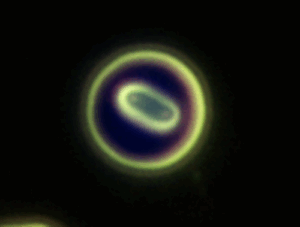
- Stomatocytes are red blood cells that display a distinctive central indentation resembling a slit or mouth-like shape rather than the usual round central pallor. Instead of a uniform circular appearance, the lighter area in the centre of the cell appears elongated or linear.
- In live blood analysis, it is not unusual to observe an occasional stomatocyte within a sample. However, when multiple red blood cells show this characteristic central indentation across several fields of view, it suggests a broader pattern rather than an isolated variation.
- The presence of stomatocytes reflects a change in red blood cell membrane behaviour and internal balance, highlighting a blood environment where cell shape is being influenced by surrounding conditions rather than permanent structural change.
Appearance
- The prefix “stoma” in Greek means “mouth”. Stomatocytes, also referred to as bowl-shaped cells, are RBCs with a narrow, mouth-like area of central pallor. These cells are overhydrated due to alterations in membrane permeability and are considered an intermediate form between biconcave discs and spherocytes.
Pleomorphic Perspective
- These forms develop as a result of consumption of the erythrocyte’s material by the endobiont. Careful inspection of the sample will reveal that there are advanced phases of the endobiont occurring.
Medical Perspective
- Stomatocytes are erythrocytes characterized by a wide transverse slit, which resembles a mouth. There is no unifying theory to explain this morphologic abnormality. Stomatocytes are seen in a variety of acquired and inherited disorders. The latter are often associated with inherited abnormalities in red cell cation permeability that may be associated with abnormal red cell hydration or membrane lipids. Disturbances of erythrocyte hydration range from the extremes of dehydration and over-hydration. Erythrocyte membrane permeability defects may include: a net loss of potassium from the red cells that is not accompanied by a proportional gain of sodium; or a sodium leak, leading to an increase in intracellular sodium and water content and a mild decrease in intracellular potassium. In some cases, erythrocytes also have increased membrane lipids, particularly phosphatidylcholine, and reduced 2,3-BPG content.
Relevance
- Stomatocytes are not usually observed in normal live blood samples. This finding is significant when seen during analysis, especially if observed in more than 3% of the total RBC sample.
Implications
- Alcoholism
- Acute alcohol intoxication
- Obstructive liver disease
- Liver cirrhosis
- Lead poisoning
- Thalassemia
Associated Symptoms
- Jaundic
- Pain in the right upper quadrant of the abdomen
- Ascites
- Nausea & vomiting
- Symptoms related to alcohol intoxication & alcoholism
- Symptoms related to thalassemia (dizziness, pallor, fatigue, palpitations, etc.)
- May also be asymptomatic
Interventions
Any combination of the following, depending on the rest of the case:
LIVER PROTOCOL:
- Avoid alcohol, caffeine, tobacco, saturated/animal fat, sugar, drugs, and non-essential medication
- Hepaton: 30 drops tincture 3x daily. May be increased to 5ml tincture 3x daily.
- Consider a liver & gall bladder flush.
CHELATION PROTOCOL (when associated with lead poisoning):
- Chelatal + HumiCaps
- Zeolite powder
SUPPLEMENTS:
- Omega-3 supplement (1000–2000 mg EPA daily).
- Vitamin E: start with 400 mg daily and gradually increase to 800 mg daily
- Buffered Vitamin C (2500 mg)
General Guidelines
- Increase water intake. To determine necessary daily water intake (in litres): Weight (kg) / 8 × 0.25
- Increase intake of fibre-rich carbohydrates (those tolerated by the blood type) and raw, polyunsaturated fats.
- Raw vegetable juices, sprouts, greens, and superfoods.
- Avoid saturated fat, refined carbohydrates, and enzyme-deficient foods.
- Avoid alcohol, caffeine, sugar, drugs, and non-essential medication.
- Increase essential minerals and electrolyte intake: Bio-Ionic Mineral Concentrate (Neogenesis Health Products)
Functional Systems Influenced
Hematological
Stomatocytes reflect a change in red blood cell shape and membrane behaviour, influencing how cells function and move within the bloodstream. The altered central indentation indicates a shift in how the cell maintains its internal balance and surface structure.
Hepatic (Liver)
The liver plays an important role in regulating fats, toxins, and overall blood composition. Changes in liver-related processing can influence red blood cell membrane characteristics, contributing to the stomatocyte appearance.
Circulation & Hydration
Red blood cell shape is sensitive to fluid balance and plasma conditions. When these factors are altered, cells may temporarily adopt a slit-like central indentation, influencing circulation quality at the micro level.
Metabolic
Metabolic processes support red blood cell maintenance and renewal. Reduced metabolic efficiency may allow altered cell shapes to persist longer within circulation.
Commonly Associated Terrain Imbalances
Acidic terrain
Shifts toward a more acidic internal environment can influence red blood cell membrane behaviour, contributing to changes in the central indentation and overall cell shape.
Hepatic overload
The liver plays a key role in managing fats, toxins, and plasma composition. When processing capacity is strained, red blood cell membrane balance may be affected, contributing to the stomatocyte appearance.
Malabsorption / enzyme deficiency
When digestion or nutrient breakdown is less efficient, the components needed for balanced red blood cell membrane structure may be inconsistently available, influencing cell shape.
Omega-3 fatty acids low
Essential fatty acids support healthy, flexible cell membranes. Reduced availability may alter membrane fluidity and contribute to changes in red blood cell contour.
Protein intake / albumin low
Adequate protein balance helps maintain normal plasma and red blood cell membrane behaviour. Reduced albumin availability may influence internal cell balance and shape.
Supportive Focus & Awareness
-
Awareness of factors that support balanced red blood cell membrane behaviour and internal structure
-
Awareness of liver function as it relates to processing fats and maintaining healthy blood composition
-
Awareness of digestive efficiency and how well nutrients are absorbed over time
-
Awareness of hydration and circulation quality, particularly at the microcirculatory level
-
Awareness of metabolic balance and its role in maintaining consistent red blood cell shape
Commonly Reported Experiences
- Some individuals whose blood patterns include stomatocytes report digestive or abdominal-related experiences. These may include nausea, occasional vomiting, or discomfort in the upper right area of the abdomen. In some cases, abdominal fullness or swelling is also described.
- Changes in skin tone, such as a yellowish appearance, are sometimes noticed and may be associated with broader digestive or metabolic influences. Others report general symptoms such as fatigue, dizziness, pallor, or a heightened awareness of heart activity, including palpitations.
- Some individuals describe experiences commonly associated with alcohol sensitivity or prolonged alcohol exposure, such as reduced tolerance, digestive upset, or general malaise. These experiences can vary widely and may be influenced by many lifestyle and environmental factors.
- It is also important to note that stomatocytes may be observed in individuals who do not report any noticeable symptoms and otherwise feel well.
These experiences are non-specific and do not confirm any condition. They should always be considered in the broader context of individual circumstances and other observations.
Systems / Body Functions
Circulation & Hydration, Hematological, Hepatic (Liver), Metabolic
Imbalances
Acidic terrain, Hepatic overload, Malabsorption / enzyme deficiency, Omega-3 fatty acids low, Protein intake/albumin low
- Stomatocytes are red blood cells that display a distinctive central indentation resembling a slit or mouth-like shape rather than the usual round central pallor. Instead of a uniform circular appearance, the lighter area in the centre of the cell appears elongated or linear.
- In live blood analysis, it is not unusual to observe an occasional stomatocyte within a sample. However, when multiple red blood cells show this characteristic central indentation across several fields of view, it suggests a broader pattern rather than an isolated variation.
- The presence of stomatocytes reflects a change in red blood cell membrane behaviour and internal balance, highlighting a blood environment where cell shape is being influenced by surrounding conditions rather than permanent structural change.
These forms develop as a result of consumption of the erythrocyte’s material by the endobiont. Careful inspection of the sample will reveal that there are advanced phases of the endobiont occurring.
 Disclaimer