You must be logged in to record observations.
Short Description
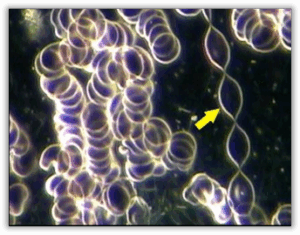
Protein linkage describes the appearance of fine strands or bridges connecting red blood cells, giving the impression that cells are partially bound together rather than freely suspended within the plasma. These linkages reduce the natural separation between cells and alter normal blood fluidity.
This pattern is commonly associated with changes in plasma composition, where circulating proteins influence cell-to-cell interaction. As these connections increase, red blood cells become less mobile and less responsive to the dynamic demands of circulation.
The presence of protein linkage is significant because it reflects a shift toward a denser, more adhesive blood environment, which may impair efficient flow and exchange at the microcirculatory level.
Pleomorphic Perspective
The primary parasitic element of the blood — the endobiont — in its higher forms, has an inherent urge to merge. When RBCs become infested with high-valence growth forms of this element, they are drawn together. These microorganisms (ascits or similar) on one RBC membrane copulate with or attach to those on adjacent cells, forming visible linkages. The upward proliferation of these organisms is fuelled by excess protein in the blood and a disturbed terrain. Linked RBCs develop thin, spider-web-like threads — composed of sticky lipids and linked symprotits on their membranes. Growth of these strands is aided by the emergence of symprotits (and sometimes chondrits) from within the cells. Lemon-shaped RBCs, whether single or in chains, suggest liver stress associated with endobiontic activity.
Medical Perspective
In standard haematology, dacrocytes (tear-drop or bowling-pin-shaped RBCs) may resemble lemon-shaped linked RBCs. They are most often observed in: – Pernicious anaemia – Thalassaemia – Myeloid dysplasia – Severe haemolytic anaemia – Extramedullary haemopoiesis – Myelophthisic anaemia – Erythroleukaemia
Relevance
Any degree of protein linkage observed in a sample is significant. The more RBCs displaying linkage — and the more fields this is observed in — the greater the emphasis on addressing this condition. If uric acid crystals and echinocytes are also present, this indicates chronic protein digestion difficulty, where poor protein breakdown contributes to uric acid accumulation and kidney stress.
Implications
This condition most often indicates excess protein in the blood due to poor protein digestion and assimilation. This stems from either excess dietary protein or from an under-active exocrine pancreas (low proteolytic enzyme production).
Other causes may include: inflammation, stress, coffee, carbonated caffeinated drinks, excess meat, refined sugar.
Also keep in mind that hormonal imbalances in both men and women may lead to protein linkage, so ask about oral contraceptives, hormone replacement therapy or prostate symptoms and refer to the reproductive ring in the layered dried blood sample.
Associated Symptoms
- Poor appetite or a heavy/bloated sensation after eating, feeling full very quickly.
- Heartburn, indigestion, or reflux after meals.
- Abdominal discomfort, bloating, or flatulence (especially worsening through the day). • Constipation or diarrhoea.
- Fatigue and shortness of breath — reduced gas transport capacity of RBCs.
Interventions
Any combination of the following, depending on the rest of the case:
DIGESTIVE PROTOCOL:
Digestal + NeoFlora + Bio-lonic Minerals
SUPPLEMENTS:
Omega-3 supplement (1000-2000 EPA daily).
Vitamin E: start with 400mg daily and gradually increase to 800mg daily.
Digestive enzymes
Vitamin B3, as non-flush Niacin (1000mg daily). Niacin helps to remove excess protein and saturated fat from the blood and stimulates hydrochloric acid production by the stomach.
Working with
Most clients with significant linkage have underlying issues with protein digestion, caused by either: – Excess protein intake beyond enzymatic capacity; or – Low production of proteolytic enzymes. Even moderate protein intake may remain undigested in such cases. Ask clients about their protein consumption and advise restriction to ~1 g/kg body weight. Vegetarians may also develop linkage due to enzyme insufficiency or poorly digested vegetable proteins. Typical supportive products: Digestal, NeoFlora, Bio-Ionic Minerals, plus Vitamin B3 and Omega-3. Symptoms may vary in presence and intensity.
General Guidelines
General Guidelines:
-
Moderate, or exclude, animal protein intake, aiming for balanced portions appropriate to body size and activity level
-
Avoid heavy or complex meal combinations; eat slowly, seated, and chew thoroughly to support digestive efficiency
-
Where relevant, consider individualised nutritional approaches that recognise biochemical uniqueness
-
Be mindful of potential food sensitivities or intolerances that may influence systemic balance
-
Increase water intake → Weight (kg) ÷ 8 × 0.25 = litres/day (2-3 litres is the average)
-
Emphasise fibre-rich carbohydrates, leafy greens, sprouts, raw or lightly processed vegetables, and antioxidant-rich whole foods
-
Reduce reliance on highly processed foods, refined carbohydrates, and excessive saturated fats
-
Minimise or avoid smoking, alcohol, excess caffeine, refined sugar, and unnecessary chemical exposure where possible
Functional Systems Influenced
Hematological
Protein linkage reflects how red blood cells interact with proteins circulating in the plasma. When proteins bind or bridge between cells, this alters normal red blood cell separation and behaviour within the blood itself.
Circulation & Hydration
Linked red blood cells are less able to move freely through the microcirculation. This can reduce circulation efficiency, particularly in smaller vessels where smooth, independent cell movement supports optimal flow.
Hepatic (Liver)
The liver plays a central role in managing plasma proteins and maintaining balanced blood composition. Changes in protein handling or clearance can influence how readily proteins interact with red blood cells in circulation.
Oxidative & Antioxidant Balance
Oxidative influences can affect both plasma proteins and red blood cell surfaces. When balance is reduced, proteins may bind more readily to cell membranes, increasing the likelihood of linkage patterns.
Commonly Associated Terrain Imbalances
Acidic terrain
Shifts toward a more acidic internal environment can influence plasma chemistry and surface charge, increasing the tendency for proteins to bind between red blood cells.
Dehydration / plasma viscosity ↑
Reduced fluid volume can concentrate plasma proteins, making it more likely for them to act as bridges between red blood cells rather than remaining evenly dispersed.
Hepatic overload
The liver plays a key role in processing and regulating circulating proteins. When processing capacity is strained, excess or altered proteins may persist in the plasma and contribute to linkage patterns.
Protein intake / albumin low
Imbalances in plasma protein composition can affect how proteins behave in circulation. Reduced albumin availability may alter normal protein distribution and increase cell-to-cell binding.
Oxidative stress ↑
Oxidative influences can modify both plasma proteins and red blood cell membranes, increasing their tendency to interact and form linkage patterns.
Supportive Focus & Awareness
-
Awareness of hydration status and how fluid balance may influence blood flow and cell separation
-
Awareness of factors that support balanced plasma composition
-
Awareness of liver function as it relates to protein handling within circulation
-
Awareness of oxidative balance and everyday influences on plasma and cellular interactions
Commonly Reported Experiences
- Some individuals whose blood patterns include protein linkage report digestive-related experiences, particularly around meals. These may include a reduced appetite, feeling full more quickly than expected, or a heavy or bloated sensation after eating.
- Others describe upper digestive discomfort such as indigestion, reflux, or heartburn following meals. Lower digestive experiences may also be reported, including abdominal bloating, flatulence, or general discomfort that tends to increase as the day progresses.
- Changes in bowel regularity, such as constipation or diarrhoea, are also sometimes mentioned. These experiences are non-specific and can be influenced by many factors, including hydration, stress, food choices, and daily routines.
Their presence does not confirm any condition and should always be considered in the broader context of individual circumstances and other observations.
Systems / Body Functions
Circulation & Hydration, Hematological, Hepatic (Liver), Oxidative & Antioxidant Balance
Imbalances
Acidic terrain, Dehydration / plasma viscosity ↑, Hepatic overload, Oxidative stress ↑, Protein intake/albumin low
Protein linkage describes the appearance of fine strands or bridges connecting red blood cells, giving the impression that cells are partially bound together rather than freely suspended within the plasma. These linkages reduce the natural separation between cells and alter normal blood fluidity.
This pattern is commonly associated with changes in plasma composition, where circulating proteins influence cell-to-cell interaction. As these connections increase, red blood cells become less mobile and less responsive to the dynamic demands of circulation.
The presence of protein linkage is significant because it reflects a shift toward a denser, more adhesive blood environment, which may impair efficient flow and exchange at the microcirculatory level.
The primary parasitic element of the blood — the endobiont — in its higher forms, has an inherent urge to merge. When RBCs become infested with high-valence growth forms of this element, they are drawn together.
These microorganisms (ascits or similar) on one RBC membrane copulate with or attach to those on adjacent cells, forming visible linkages. The upward proliferation of these organisms is fuelled by excess protein in the blood and a disturbed terrain.
Linked RBCs develop thin, spider-web-like threads — composed of sticky lipids and linked symprotits on their membranes. Growth of these strands is aided by the emergence of symprotits (and sometimes chondrits) from within the cells. Lemon-shaped RBCs, whether single or in chains, suggest liver stress associated with endobiontic activity.
 Disclaimer