You must be logged in to record observations.
Short Description
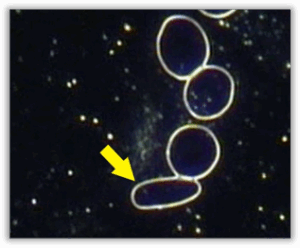
Elliptocytes are red blood cells that appear elongated or oval rather than round, giving them an elliptical shape. Instead of the usual flexible, biconcave form, these cells are stretched along one axis, altering how they behave as they circulate.
This change in shape can reduce the cell’s ability to deform easily as it passes through small blood vessels. Because red blood cells rely on flexibility to move efficiently through the microcirculation, elongation may influence how smoothly blood flows and how effectively oxygen is delivered to tissues.
The presence of elliptocytes highlights a blood terrain where red blood cell structure and adaptability may be under strain, reflecting altered conditions within the circulating environment.
Appearance
Elliptocytes (also known as ovalocytes) are red blood cells (RBCs) that are ovoid or elliptical in shape, usually appearing flat instead of the standard biconcave disc. They are frequently seen in association with certain anaemias and hereditary membrane defects.
Pleomorphic Perspective
These forms develop as a result of a deficiency in coenzymes during erythrocyte formation, representing a progression of the endobiont’s influence on cell structure.
Medical Perspective
Elliptocytes develop as erythrocytes mature from reticulocytes. In congenital elliptocytosis, up to 90 % of RBCs may become elliptically shaped due to a hereditary defect in the spectrin chain of the cytoskeletal proteins. Elliptocytes also appear in iron deficiency anaemia, megaloblastic anaemia, myelofibrosis, leukaemia‑associated anaemias, thalassaemia, and dyserythropoiesis.
Relevance
Relevance
Elliptocytes are a notable observation in live blood analysis because they represent a clear departure from the typical round red blood cell shape. Their relevance increases when they are observed consistently across multiple fields of view or alongside other red blood cell shape variations, suggesting a broader pattern rather than an isolated finding.
Implications
Implications
When red blood cells become elongated, their ability to adapt to changes in vessel size may be reduced. This can influence circulation efficiency at the micro level, particularly in tissues with high oxygen demand.
Persistent elliptocyte patterns suggest a blood terrain where red blood cell adaptability and structural consistency may be reduced. While this does not indicate disease, it highlights a circulatory environment that may be less responsive under physical or metabolic stress.
Functional Systems Influenced
Functional Systems Influenced
Hematological
Elliptocytes directly reflect changes in red blood cell shape and structural integrity, influencing how cells function within the blood.
Digestive & Nutrient Assimilation
The formation and maintenance of healthy red blood cells depend on adequate availability of nutrients involved in cell structure and membrane stability. Reduced assimilation may be reflected in altered cell shapes.
Circulation & Hydration
Elongated red blood cells may move less efficiently through narrow vessels, affecting microcirculatory flow, particularly when fluid balance is suboptimal.
Commonly Associated Terrain Imbalances
Commonly Associated Terrain Imbalances
Iron insufficiency
Iron availability influences red blood cell development and structure. Variations in availability or utilisation may be reflected in elongated cell forms without indicating a clinical deficiency.
B12 / Folate insufficiency
These nutrients support red blood cell maturation and structural consistency. Reduced availability may contribute to altered cell shape over time.
Malabsorption / enzyme deficiency
When nutrients are not efficiently absorbed, the building blocks required for optimal red blood cell formation may be limited, contributing to shape variation.
Protein intake / albumin low
Adequate protein availability supports plasma balance and cell structure. Reduced levels may influence red blood cell resilience and shape.
Supportive Focus & Awareness
Supportive Focus & Awareness
-
Awareness of factors that support healthy red blood cell structure and flexibility
-
Awareness of digestive efficiency and long-term nutrient availability
-
Awareness of circulation quality and hydration balance
-
Awareness of energy levels, stamina, and recovery patterns
Commonly Reported Experiences
Commonly Reported Experiences
Some individuals whose blood patterns include elliptocytes report reduced stamina, feeling fatigued more easily, or noticing slower recovery after exertion. Others may describe general sensations related to circulation efficiency, particularly during periods of increased demand.
These experiences are non-specific and vary widely between individuals. Their presence does not confirm any condition and should always be interpreted in context.
Systems / Body Functions
Digestive & Nutrient Assimilation, Hematological, Oxidative & Antioxidant Balance
Imbalances
B12 / Folate insufficiency, Iron insufficiency, Malabsorption / enzyme deficiency, Protein intake/albumin low
Elliptocytes are red blood cells that appear elongated or oval rather than round, giving them an elliptical shape. Instead of the usual flexible, biconcave form, these cells are stretched along one axis, altering how they behave as they circulate.
This change in shape can reduce the cell’s ability to deform easily as it passes through small blood vessels. Because red blood cells rely on flexibility to move efficiently through the microcirculation, elongation may influence how smoothly blood flows and how effectively oxygen is delivered to tissues.
The presence of elliptocytes highlights a blood terrain where red blood cell structure and adaptability may be under strain, reflecting altered conditions within the circulating environment.
These forms develop as a result of a deficiency in coenzymes during erythrocyte formation, representing a progression of the endobiont’s influence on cell structure.
 Disclaimer