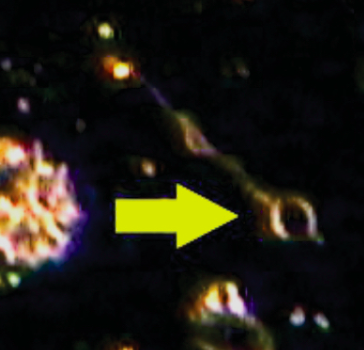
Short Description
Also referred to as cell wall deficient forms (CWD’s), L-phase variants (and chondrits in pleomorphism) L-form bacteria are pleomorphic bacteria and can therefore assume a number of different shapes. They spend a large part of their life cycle as tiny (about 0.01 microns in diameter) spherical forms, too small to be observed with a normal optical microscope. At times, L-form bacteria can be observed breaking out of cells, where they can grow into long, thin biofilm filaments that can reach 60-70 microns in length. The biofilm filaments are composed of L-form bacteria and a protective protein sheath.
These bacteria lack a cell wall, which renders them very flexible and since they do not have flagella, their motion is very different from normal bacteria. They may also appear as more complex structures, with 3-4 spheres or donuts interconnected by a thin thread. This appearance is most likely related to the bacteria replicating. Some classify the butterfly or disc-shaped bodies visible around some platelets as L-form bacteria, but these are more accurately classified as Pteroharpen.
Medical Perspective
L-form bacteria (also known as cell wall deficient bacteria) are a phase of some bacteria that are very small and lack cell walls. Though the subject of a great deal of research over the last 100 years and implicated in a variety of diseases, L-forms remain largely misunderstood and their role in disease underappreciated by the medical research community. Thus far, researchers have identified over 50 different species of bacteria capable of transforming into the L-form and it is likely that more species will be found in the coming years. Some of the species of L-form bacteria that have been implicated in chronic disease include Bacillus anthracis, Treponema pallidum, Mycobacterium tuberculosis, Helicobacter pylori, Rickettsia prowazekii, and Borrelia burgdorferi.
Cell wall deficient variants of bacteria cannot be killed by many commonly used antibiotics. L-form bacteria replicate in various ways, including budding, filamentous growth and binary fission. Some species of L-forms replicate by forming granules that bud off from the body of the bacterium and give rise to small L-form colonies. They often divide by the extension of thin protrusions from the cell’s surface and the subsequent pinching off of the protrusions to form new cells. This unusual form of replication may represent a form of cell division that was important in early life forms.
Classical forms of most bacterial species can be found in the bloodstream. However L-form bacteria have figured out how to successfully infect and live inside the very cells of the immune system whose role is to kill bacteria. Once inside these cells, they can no longer be detected by the immune system and are able to persist in the body over long periods of time. L-form bacteria can infect many types of cells but prefer to infect white blood cells called macrophages. Several very recent studies have confirmed the fact that bacteria can live inside the cells of the immune system. In a paper published in the Journal of Immunology by a team at the University of Michigan Medical School, Gabreil Nunez, senior author of the paper, stated “In our study, the presence of bacterial microbes inside the cell is what triggers the immune response.” Similarly, a team of researchers at the Bacterienne Institute in France released a paper detailing how the bacteria E. coli is able to live inside the cells of the immune system.
L-form bacteria cause inflammation and painful symptoms by taking control of the protein known as Nuclear Factor Kappa B. They are able to activate proteins that increase the activity of Nuclear Factor Kappa B, which subsequently moves to the nucleus or centre of the cell. Once there, it turns on a variety of genes that cause the release of inflammatory cytokines, proteins that generate pain and/or fatigue. These cytokines include interferon gamma and TNF alpha. In this way, an inflammatory response is correlated with diseases caused by L-form bacteria. An inflammatory immune response-one of the body’s primary means to protect against infection-defines multiple established infectious causes of chronic diseases, including some cancers.
Inflammation also drives many chronic conditions that are still classified as (non-infectious) autoimmune or immune-mediated (e.g. systemic lupus erythematosus, rheumatoid arthritis, Crohn’s disease).
Pleomorphic Perspective
Some morphological presentations of L-forms are referred to as chondrits in pleomorphism. Many different species of microorganisms have a non-cell wall mediated form as part of their potential life cycles. By referring to a microorganism as an L-form it is implied that it is capable of reverting to its more pathogenic form. When it enters the L-phase, it is actually in a holding pattern, which it can maintain for a long time since its very simple wall is not affected by antibiotics like penicillin. It can then evolve into its higher pathogenic form again when the terrain allows for it. Although L-forms are considered less pathogenic forms of a microorganism, these intermediate forms are nevertheless related to acute and chronic infection. They have been isolated from the blood of patients who have been on antibiotics, such as penicillin, and it has been shown that antibiotic treatment (which works by inhibiting complete cell wall formation or by breaking down the cell wall) can induce organisms to go into the L-phase. They have also been isolated from the blood of patients suffering from chronic fatigue syndrome.
Relevance
An optimally functioning immune system will prevent L-forms from being present in a drop of peripheral blood. These are significant if observed in a sample. L-forms will be more readily observed in a sample that is more than an hour old. Observing L-forms in samples not older than an hour is much more significant and indicative of a higher degree of infection.
Implications
- Some types of bacteria are able to shed their cell walls under certain conditions as a survival mechanism. The cell enters into a more primitive form, and due to the lack of a cell wall, is then resistant to antibiotics
- Antibiotic treatment, such as Penicillin, can induce bacteria to enter the L-form stage.
- Acidic terrain
- Intestinal dysbiosis
- Weak immune system
- High blood sugar/ blood sugar imbalance
- Junk food consumption, especially sugar
Associated Symptoms
- Chronic Fatigue
- Frequent colds and flu.
- Prolonged simple infections
- Slow healing of wounds
- Possible diabetic and imbalanced blood sugar symptoms
Working With
With live blood analysis one is able to see living microbes in the blood. The presence of bacteria is in the majority of cases not necessarily indicative of an infection. We are exposed to microorganisms on a daily basis in our environment. When they enter the blood stream, they are quickly destroyed by an optimally functioning immune system’s white blood cells. Microbial activity in the blood stream, while not indicative of an infection, alludes to an acidic biological terrain that is conducive to microbial activity and therefore unsuited for efficient cellular and immune function which requires a balanced alkaline biochemistry. Bear in mind that live blood analysis is not a sterile process and some bacteria may contaminate blood samples. It is possible that some bacteria visible in live blood samples entered the sample during the preparation of the specimen. This will be the most likely cause should you observe bacteria in nearly all your blood samples and if the client’s clinical situation does not correlate to the imbalances known to be associated with the presence of bacteria in live blood samples.
 Disclaimer