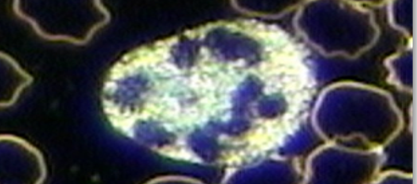
Appearance
Hypersegmented neutrophils are neutrophils with:
- More than 5 nuclear lobes
- Sometimes up to 6–7 segments
- Long, thin lobe connections (“filament bridges”)
- Overly elongated or thread-like nuclear segments
They appear “over-mature” or “stretched.”
Meaning & Implications
Hypersegmentation is a classic sign of impaired DNA synthesis, commonly due to:
A) B12 or Folate Deficiency
This is the primary cause, and the most reliable live blood indicator of B12 deficiency.
B) Iron Deficiency
Often paired with chronic menstrual blood loss or digestive disorders.
C) Digestive Weakness
Low stomach acid or malabsorption.
D) Alcohol Consumption
Heavy alcohol reduces folate absorption.
E) Chronic Inflammation
Inflammatory bowel disease
Autoimmune disease
Chronic infections
Functional Interpretation
Hypersegmentation shows the immune system is producing slow, nutritionally compromised cells.
This aligns with:
- Fatigue
- Poor concentration
- Low mood
- Digestive dysfunction
- Tingling or neurological symptoms (if B12 low)
Interventions
B12 & Folate Protocol
- Methylcobalamin
- Methyl-folate
- Vitamin C (2 g twice daily)
- Zinc
- Probiotics to support gut absorption
Support Methylation
- B-complex with activated B-vitamins
- Magnesium
- Lifestyle support (reduce alcohol)
Digestive Support
- Digestive enzymes
- HCl support where indicated
General Guidelines
- Increase leafy greens
- Increase beetroot, spinach, asparagus
- Reduce sugar and alcohol
- Improve hydration
- Regular moderate exercise
Further Investigations
- Serum B12, folate
- Intrinsic factor antibodies (if B12 deficiency suspected)
- Homocysteine
- MMA
- Full CBC
- Thyroid panel (hypothyroidism can worsen hypersegmentation)
 Disclaimer