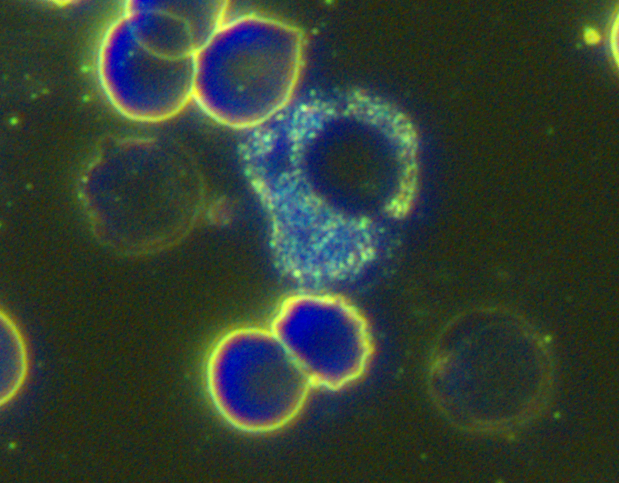
Monocytes are the laid-back giants of your white-blood-cell family. They’re the biggest leukocytes (15–20 µm across), with a quirky kidney-shaped or indented nucleus and a ton of soft grey-blue cytoplasm that often looks like it’s been to yoga class (lots of vacuoles and a relaxed vibe).
How they come about
Born in the bone marrow from the same stem-cell lineage as neutrophils, but they take the “slow and steady” path. While neutrophils are the hyperactive toddlers rushing out in 24–48 hours, monocytes hang out maturing for a few extra days before they’re released.
What they actually do (their day job)
They cruise around in the blood for 10–20 hours looking bored … then they get the best promotion ever: they squeeze out of capillaries and transform into macrophages (“big eaters”) or dendritic cells. Once they leave the bloodstream, they bulk up, grow extra arms (pseudopods), and become the vacuum cleaners and security guards of your tissues.
Where they can go
Literally everywhere. Liver (Kupffer cells), lungs (alveolar macrophages), brain (microglia), spleen, lymph nodes, gut, skin – you name it. If there’s a tissue, there’s a retired monocyte living there rent-free keeping the place tidy.
Lifespan
- In blood: short gap year of ~10–20 hours
- After turning into macrophages in tissues: from a few months up to several years (some liver and brain ones basically move in for life).
Appearance
Large cell (15–20 µm), kidney-shaped/indented nucleus, abundant grey-blue cytoplasm, fine chromatin, often vacuolated
Relevance
Normal: 3–8 % (0–1 per field at 200×)
Suspect monocytosis: >2 monocytes per field
Implications / Increased In
- Chronic bacterial, fungal, parasitic or viral infections
- Auto-immune conditions
- Recovery phase after acute infection
- Heavy-metal & chemical toxicity
- Chronic inflammation, inflammatory bowel disease
- Malignancy (rare)
Decreased In
Almost never clinically significant when low
General Guidelines
Increase water, fibre-rich carbs (blood-type appropriate), raw PUFA, green juices, sprouts, antioxidant superfoods
Interventions
Core Immune Protocol: Immucil + HumiCaps + NeoFlora
Glutathione 500 – 1–2 caps daily
Calcium ascorbate 2 g 2×/day, Zinc, NAC, proanthocyanidins, astaxanthin
Bio-Ionic Mineral Concentrate
Further Investigations
Heavy-metal hair/urine test, stool CDSA, chronic infection panels
 Disclaimer