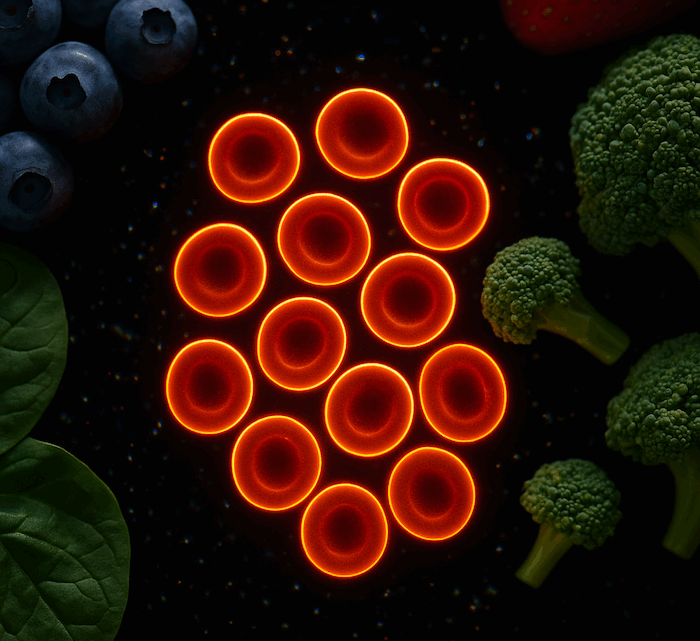
When most people hear the words free radicals, they imagine something dangerous lurking inside the body. The truth is both simpler and more fascinating: free radicals are a natural part of life, always present in your system, shaping how your cells behave.
At Life Under the Lens, we help people see how lifestyle choices affect their blood in real time. And while we don’t diagnose, free radicals and their effects are one of the most important lessons we can share.
What Are Free Radicals?
Think of free radicals as tiny sparks. They’re molecules missing an electron, and because of that, they’re unstable. To regain stability, they steal an electron from the nearest molecule they can find — often from a cell membrane or protein.
This chain reaction is called oxidative stress. If left unchecked, oxidative stress can gradually wear down tissues and speed up ageing. But it’s important to remember: free radicals aren’t villains. They play essential roles, including helping immune cells fight off infections. The problem arises when the balance tips too far in their favour.
Where Do They Come From?
Free radicals are formed in your body every single day. Some common sources include:
- Natural processes: breathing, digesting food, and even exercising all create them.
- Immune defence: white blood cells release free radicals to destroy bacteria and viruses.
- Lifestyle factors: smoking, alcohol, poor diet, pollution, and chronic stress all increase their load.
In short, you can’t avoid them entirely. But you can influence how your body handles them.
Free Radicals Under the Microscope
Here’s where things get interesting. When we place a fresh drop of blood under darkfield microscopy, we’re not counting free radicals — but we can sometimes see the effects of oxidative stress.
- Red blood cells may appear less vibrant, or their membranes less uniform.
- Cell clumping can be more pronounced when the balance is off.
- Plasma, the liquid portion of the blood, may look busier or less clear.
Again, this isn’t a diagnosis. But it is education. Seeing your blood in motion helps you appreciate that oxidative stress isn’t abstract science — it’s something that influences how your body functions day to day.
Antioxidants: Nature’s Balancing Force
If free radicals are sparks, antioxidants are the fire blankets. They neutralise free radicals by giving them the electron they crave — without becoming unstable themselves.
Where do antioxidants come from?
- Colourful fruits and vegetables — blueberries, spinach, carrots, broccoli.
- Vitamins and minerals — vitamins C, E, and zinc play important roles.
- Lifestyle choices — hydration, regular rest, and stress management all help your body’s own antioxidant systems stay strong.
You don’t need complicated supplements or exotic powders. Often, the simplest foods — berries, leafy greens, nuts — are the most effective.
Daily Habits to Reduce Oxidative Stress
The best way to keep free radicals in check isn’t through drastic measures, but through small, consistent lifestyle habits:
- Eat the rainbow: aim for a variety of fruit and veg colours on your plate each day.
- Hydrate regularly: 2–3 litres of clean water daily helps cells stay resilient.
- Move your body: moderate exercise boosts circulation and supports antioxidant defences.
- Prioritise rest: good sleep is when your body repairs and restores.
- Cut down on toxins: reduce smoking, excess alcohol, and ultra-processed foods.
These aren’t rigid rules — they’re gentle shifts that support balance over time.
Balance, Not Elimination
It’s easy to demonise free radicals, but remember: you need them. They’re part of your immune system’s toolkit, part of your energy production, and part of life itself. The goal isn’t to eliminate them — it’s to keep them balanced.
When the balance tips towards too much oxidative stress, cells can suffer. When antioxidants are plentiful, your blood flows more freely, your tissues stay resilient, and you feel more energised.
Final Word
Free radicals are a fact of life. But by staying hydrated, eating colourful foods, managing stress, and moving your body, you can tip the balance towards health.
At Life Under the Lens, we show people how these everyday choices can play out in their bloodstream. Not as numbers on a report, but as living, glowing cells in motion.
Because when you see your blood come alive, you realise something powerful: wellness isn’t abstract. It’s happening inside you, right now — and you have the ability to shape it.
 Disclaimer