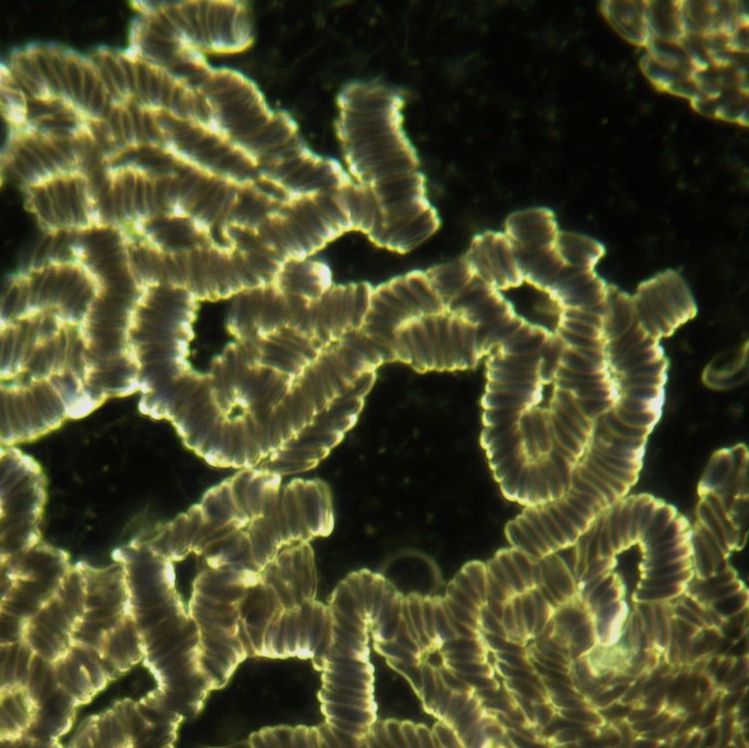
This darkfield microscopy image shows a striking case of red blood cell aggregation. Instead of flowing freely as individual cells, the red blood cells are stacked tightly together in long chains, a formation known as rouleaux (from the French word for “rolls of coins”).
In healthy blood, red cells usually remain separate, allowing them to move smoothly through even the tiniest capillaries. Here, however, the cells are clumping together in dense patterns, almost like braided ribbons. This “sludging” effect can make circulation less efficient, reducing oxygen delivery to tissues and putting additional strain on the cardiovascular system.
Common factors that may contribute to this level of aggregation include dehydration, high levels of inflammation, excess proteins or lipids in the plasma, and sometimes stress or poor diet. Under the microscope, the result is dramatic: a tangled network of cells that no longer resembles free-flowing blood, but rather a congested traffic jam.
 Disclaimer