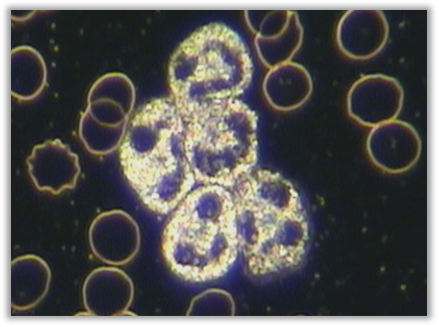
Appearance
Neutrophil cohesion occurs when two or more neutrophils stick together, showing:
- Tight linking at the membrane
- Shared borders
- Reduced spacing
- Possible movement as a unit
The granulation and nuclear segmentation remain normal, but the cells behave as though magnetised.
Meaning & Implications
Cohesion indicates activation of inflammatory mediators, usually caused by:
A) Acute Inflammation
- Injury
- Infection
- Tissue damage
B) Allergy & Histamine
Often seen with raised basophils and eosinophils.
C) Autoimmune Activity
Cells respond to cytokine signalling and increase surface adhesion.
D) Early Infection
Viral or bacterial triggers.
E) Poor Hydration
Thicker plasma increases adhesion tendency.
Functional Interpretation
Neutrophil cohesion suggests:
- A terrain in active inflammatory signalling
- Leukocytes responding to chemotactic factors
- Increased oxidative stress
- Possible allergy burden
Clients may present with:
- Sinus congestion
- Muscle aches
- Digestive inflammation
- Joint pain
- Eczema or skin irritation
- “Flu-like” symptoms
Interventions
Anti-Inflammatory Protocol
- Omega-3 EPA/DHA
- Curcumin
- Astaxanthin
- Zinc
- Vitamin C
- Glutathione
Allergy Support
- Sinugen
- Quercetin
- Bromelain
- Low-histamine diet
Hydration
- Increase water intake (weight in kg ÷ 8 × 0.25 L)
Further Investigations
Viral screen
ESR / CRP
FBC
Allergy panels
Thyroid function test
Stool test (if digestive inflammation suspected)
 Disclaimer