Appearance
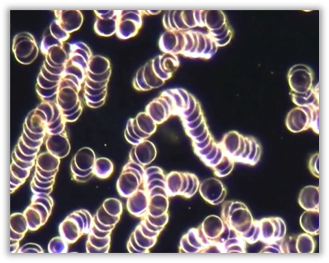
Rouleau is French for ‘rolls’. The term describes the appearance of red blood cells (RBCs) in this condition, forming strings of overlapping RBCs stacked on top of one another.
Relevance
At the periphery of the sample, rouleau may appear due to slide and coverslip pressure (with precipitated fibrin), which is not significant. True rouleau is considered significant when seen in over 50% of the working area at low magnification. The degree of overlapping can range from loosely stacked cells (mild rouleau) to tightly stacked cells (severe rouleau).
Implications
- RBC stickiness arises from elevated serum proteins such as fibrinogen and immunoglobulins
- The process progresses from protein linkage (mild stickiness) → rouleau (moderate) → erythrocyte aggregation (severe).
- Zeta potential loss (from protein binding) renders RBCs sticky.
- Overly acidic pH reverses natural cell polarity, worsening rouleau.
- Trace mineral deficiency and electrolyte imbalance disturb pH and enzyme production.
- Rouleau appears in inflammatory, infectious, and chronic disease settings including liver disease, dehydration, and alcoholism.
Associated Symptoms
- Poor appetite or a heavy/bloated feeling after eating.
- Heartburn, indigestion, or reflux.
- Abdominal discomfort, bloating, and flatulence (especially later in the day).
- Constipation or diarrhoea
- Fatigue, shortness of breath, cold hands/feet, tingling or numbness — from reduced RBC flow and gas exchange.
Pleomorphic Perspective
The primary parasitic element of the blood, the endobiont, in its higher forms merges RBC membranes, causing rouleau. High-valence microorganisms copulate between adjacent cells. Rouleau correlates with increased ESR and blood viscosity. Mucor racemosus Fresen (the ‘congester’) raises viscosity and coagulation. Stuck RBCs create nutrient pockets for endobiont growth. Pressurizing the coverslip can rupture cells, releasing higher growth forms hidden in or on RBCs.
Medical Perspective
Peripheral blood smears show rouleau when ESR is raised, a non-specific inflammation marker. ESR depends on the balance between fibrinogen (sedimentation promoter) and zeta potential (resistor). In inflammation, increased fibrinogen and globulins cause RBCs to clump and settle faster. Severe rouleau may impair capillary flow, reducing gas exchange and causing local hypoxia, acidosis, and fatigue. Causes include anaemia, infection, allergy, trauma, and lymphoproliferative disorders.
Interventions
Digestive Protocol:
- Digestal + NeoFlora + Bio-Ionic Mineral Concentrate (Neogenesis Health Products)
Acidity Protocol:
- Alkazen + Bio-Ionic Mineral Concentrate + alkaline-forming diet
Inflammation Protocol:
- HumiCaps: 2–4 capsules, twice daily
- Curcumigen: 1 capsule, 1–2× daily
- Glutathione 500: 1 capsule, 1–2× daily
- Trace minerals: Bio-Ionic Mineral Concentrate
- Omega-3: 1000–2000 mg EPA daily
Supplements:
- Digestive enzymes
- Vitamin B3 (non-flush Niacin, 1000 mg/day)
- Reduce animal protein to 1 g/kg body weight daily
- Avoid starch-protein combinations, eat slowly, follow blood-type diet
- Increase water, fibre, raw greens, sprouts, and antioxidant-rich foods
- Avoid alcohol, caffeine, sugar, and unnecessary medication
Working with Rouleau:
- Most clients with rouleau show digestive imbalance or enzyme deficiency. Ask about digestion and correlate with other terrain signs even if no symptoms appear. Initial focus is to restore digestion and mineral balance using Digestal, NeoFlora, and Bio-Ionic Minerals. Vitamin B3 and enzymes also help. Persistent rouleau despite correction may indicate degenerative disease — in such cases, pursue conventional investigations.
Further Investigations
- FBC + Differential + ESR
- Urea, Electrolytes & Creatinine (UE+C)
- LFT + Globulin
- Lipogram (fasting) + Homocysteine
- Glucose (fasting) + Insulin / GTT (Glucose Tolerance Test)
- C-Reactive Protein (CRP)
- D-Dimer (FDP alternative)
- Serum Protein Electrophoresis
- Quantitative Immunoglobulins
- Immunoelectrophoresis
- RF (Rheumatoid Factor) + ANF (Antinuclear Factor)
- Cardiac Enzymes: AST, LDH, CK, CK-MB, Troponin-T
- Hepatitis Screen
- Thyroid Function Test
- TNF (Tumour Necrosis Factor) + Tumour markers
- Food Sensitivity Assay (IgG)
- IgE + Phadiotop (Inhalant Allergens) + Fx5 (Food Allergy Test)
Note:
- Rouleau caused by acute phase proteins may indicate serious pathology if unresponsive to nutritional correction. Further tests should rule out arthritis, arteritis, cholecystitis, cirrhosis, diabetes, endocarditis, multiple myeloma, rheumatic and hepatic disease, hyperthyroidism, chronic infection, nephritis, lupus, ulcer, colitis, and neoplasia
 Disclaimer