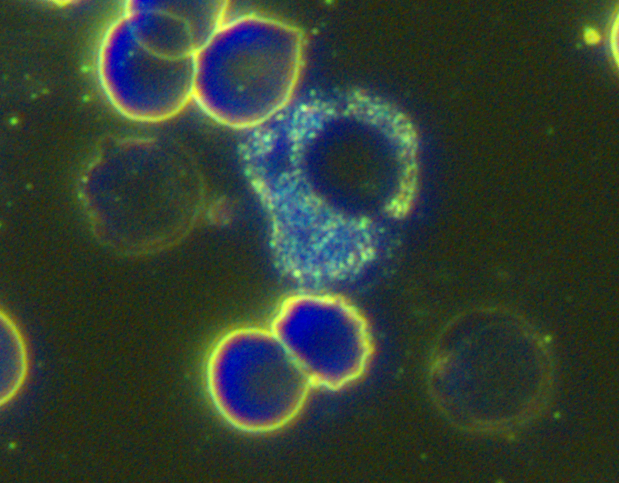
Neutrophils are the most numerous white blood cells (typically 40–75 % of total leukocytes) and the body’s rapid-response team against acute bacterial invasion and tissue injury.
How they come about
Produced in huge numbers in the bone marrow (up to 100 billion daily), they mature over 10–14 days, becoming packed with granules containing powerful antimicrobial enzymes, reactive oxygen species, and proteins.
What they do
Within minutes of an alarm signal they marginate (stick to blood-vessel walls), squeeze between endothelial cells, and migrate directly to the site of infection or damage. There they:
- Phagocytose (engulf and digest) bacteria and debris
- Release neutrophil extracellular traps (NETs) to immobilise pathogens
- Degranulate to flood the area with antimicrobial substances
Where they can go
Virtually any tissue that becomes inflamed or infected – skin, lungs, sinuses, gut, joints, urinary tract, and more.
Lifespan
- Circulating in blood: 6–12 hours
- Active in tissues: 1–2 days, after which they die and form part of the pus that macrophages later clear away
In practice
A clear neutrophilia (>7 per field at 200×) almost always signals an acute bacterial process, significant stress, or acute toxicity. They arrive fast, work hard, and burn out quickly – the classic “first wave” of the acute inflammatory response.
Appearance
Multi-lobed nucleus (3–5 lobes), pale cytoplasm with fine granules
Relevance
Normal: 40–75 % (2–7 per field)
Neutrophilia: >7 per field or >75 %
Neutropenia: <2 per field
Implications / Increased In
Acute bacterial infection, acute inflammation, tissue necrosis, stress, toxicity, dehydration, steroid use
Decreased In
Viral infections, chemotherapy, severe toxicity, B12/folate deficiency, bone-marrow suppression
General Guidelines
Same as above + strict avoidance of sugar/trans fats during acute phase
Interventions (Neutrophilia)
Core Immune Protocol + Calcium ascorbate to bowel tolerance (6–15 g/day)
Interventions (Neutropenia)
NeoFlora + Glutathione 500 + high-dose methyl-B12 & folate + trace minerals
Further Investigations
CRP, blood culture if fever, viral serology
Left Shift / Toxic Neutrophils
Appearance
Band forms, Döhle bodies, toxic granulation, cytoplasmic vacuoles
Relevance
Any visible toxic changes = significant
Implications
Overwhelming acute infection or toxicity
Interventions
Immucil 3 caps 3× daily + HumiCaps + massive antioxidants 5–14 days
Hypersegmented Neutrophils
Appearance
5 nuclear lobes
Implications
B12 and/or folate deficiency, chronic heavy-metal burden
Interventions
Methylcobalamin 5 000 mcg + methylfolate 5 mg + B-complex daily
 Disclaimer