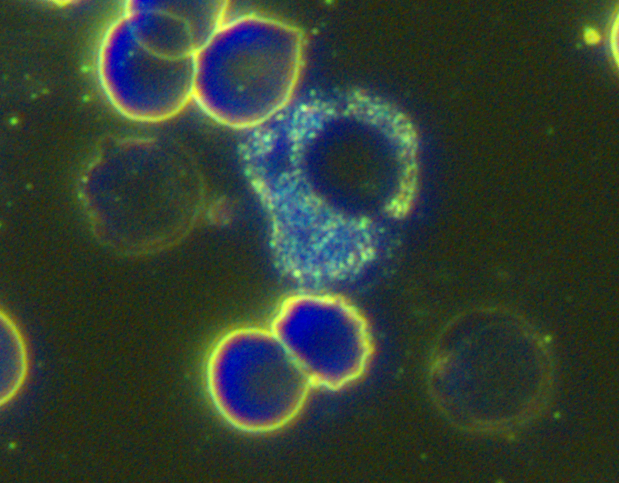
Lymphocytes are the quiet professionals of the immune system: small (7–12 µm), with a large round nucleus that takes up most of the cell and only a thin rim of sky-blue cytoplasm. They look modest under the microscope, but they run the long-term strategy.
How they come about
Born in the bone marrow, most then migrate to the thymus (T-cells) or stay in lymphoid tissue (B-cells and natural killer cells) to mature and be trained. This education process can take weeks to months and creates memory cells that last decades.
What they do
- T-cells: direct cell-mediated attack (cytotoxic T-cells), orchestrate the whole immune response (helper T-cells), or calm things down (regulatory T-cells)
- B-cells: manufacture highly specific antibodies that tag invaders for destruction
- NK cells: patrol for virus-infected and cancerous cells and eliminate them on sight
Unlike neutrophils, lymphocytes don’t rush in and explode; they recognise, remember, and coordinate.
Where they can go
They constantly recirculate between blood, lymph nodes, spleen, tonsils, Peyer’s patches in the gut, and other mucosal tissues. They’re the only white cells that routinely return from tissues back into the lymphatic system and blood – true travellers.
Lifespan
- Short-lived effector cells: days to weeks
- Memory T- and B-cells: years to lifelong (this is why you usually only get chickenpox once)
In practice
- Lymphocytosis (>4 per field) → current or recent viral infection, chronic infection, or post-viral recovery
- Lymphopenia (<1 per field) → immune exhaustion, severe/chronic stress, zinc deficiency, or significant toxic burden
- Reactive/atypical lymphocytes → active viral replication (especially EBV, CMV, toxoplasmosis)
Under the scope, lymphocytes are the calm thinkers in a sea of chaos – when they’re low, the body has lost its strategic command; when they’re high or look “activated,” the intelligence service is working overtime.
Appearance
Round nucleus, thin rim of sky-blue cytoplasm
Relevance
Normal: 20–45 % (1–4 per field)
Lymphocytosis: >4 per field
Lymphopenia: <1 per field
Increased In
Viral infections, chronic infections, post-viral recovery, lymphatic congestion
Decreased In
Severe viral exhaustion, adrenal burnout, zinc deficiency, corticosteroid excess
Interventions (Lymphopenia)
Glutathione 500 (2 caps 2× daily) + Zinc 50 mg + adrenal support
Atypical / Reactive Lymphocytes
Appearance
Large, irregular nucleus, abundant basophilic cytoplasm, sometimes “hugging” RBCs
Implications
Active EBV, CMV, toxoplasmosis, chronic immune activation
Interventions
Immucil + NeoFlora + lysine 3–6 g/day + high antioxidants
 Disclaimer